

Banking in Ireland 2024- What’s new?

What types of banks are operating in Ireland?

If you are looking to open a business bank account for your company in Ireland, you can be assured that Ireland has a vibrant and modern banking sector.

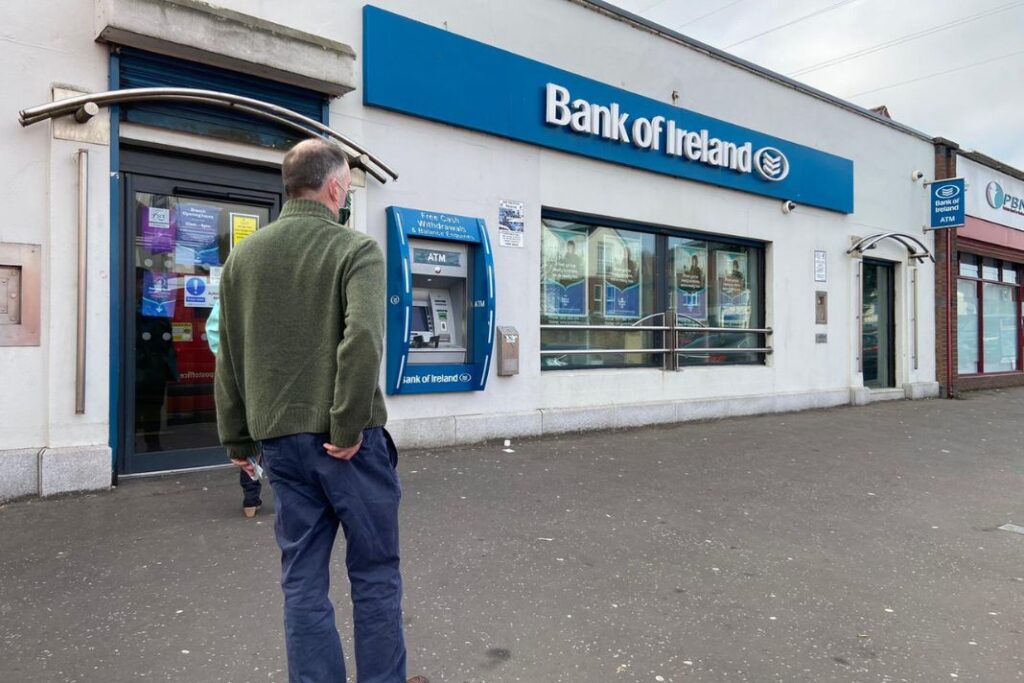
The three main traditional banks operating in Ireland are:

The Irish government has a minority share in the Bank of Ireland, namely 9.3%. At the same time, it should be mentioned that the state is the majority shareholder in two banking groups, Allied Irish Banks, where it controls 71%, and TSB with 75% of the shares.

Digital banks

In recent years, bank customers have tended to move away from traditional banks to digital or online banks. This is largely due to the convenience and flexibility that these banks offer. For example, digital banks like Revolut, Fire, and N26 have entered the Irish market.

These banks can be much easier to use than traditional banks, thanks to tailored interfaces and features such as the use of a mobile app. Some may also offer competitive interest rates on savings accounts and loans.

As people become more comfortable paying for goods or services in stores by simply touching the screen on their phone, the use of mobile payments is still on the rise.
The new banking app in the Irish market: from traditional to digital

If you’re considering opening a business bank account for your company in Ireland and are concerned about the ability of traditional banks to provide instant payment services and easy online banking, you can take comfort in knowing that a new digital banking app is on its way.

Ireland’s leading banks have been given permission to create a new app that could rival Revolut. The Competition and Consumer Protection Commission (CCPC) have cleared Synch Payments DAC, which describes its product as “an industry-wide instant mobile payment service designed to transform and revolutionize the way payments are made” in Ireland.”

Synch Payments, a new company, will provide a new mobile payment service called Yippay. The new app will allow customers to make instant person-to-person and person-to-business transactions.

With a selection of digital banks and traditional banks, having digital banking features that promise to be excellent, the Irish banking system offers a number of options for businesses looking to open a bank account in Ireland.

Should you wish to discover your options available based on your current situation, do not hesitate to book a free consultation with our team now.

Disclaimer

Widelia and its affiliates do not provide tax, investment, legal or accounting advice.  Material on this page has been prepared for informational purposes only, and is not intended to provide, and should not be relied on for, tax, investment, legal or accounting advice. You should consult your own tax, legal, and accounting advisors before engaging in any transaction. Please consult https://widelia.com/disclaimer/ for more information.


Author

Jared Young

Entrepreneur Leadership Network Contributor
I’m a digital nomad from Germany. I help companies thrive in their digital marketing strategies and help them build sustainable remote work strategies.
I have been running a digital marketing agency for 8 years. Light Spark helped more than 60 happy customers.I recently launched Gpoint, a company focused on remote work productivity and well-being for companies, freelancers and digital nomad.
Over the last 6 years, I have been working remotely as a digital nomad from 40+ destinations such as Kazakhstan, Chile, Budapest, London.
I love writing and want to share insights and advice to remote workers and digital nomads.

Latest News

business

What banks look for when opening a business bank account in 2026

by | Jun 3, 2026 | Blog | 0 Comments

Opening a business bank account in 2026 is no longer a simple compliance exercise. If your Know Your Customer (KYC) checks passed, approval often followed shortly...

Crypto Business Banking in 2026: How Digital Asset Companies Can Secure and Maintain Banking Access

by | May 27, 2026 | Blog | 0 Comments

Crypto and digital asset businesses are entering a more heavily regulated financial environment in 2026. What was once considered a lightly supervised sector has now...

FATF High-Risk Jurisdictions List 2026: What It Means for Your Business Banking

by | May 20, 2026 | Blog | 0 Comments

STAYING UPDATED WITH THE FATF HIGH-RISK JURISDICTIONS LIST The global banking system is becoming increasingly cautious in 2026. As the Financial Action Task Force...

Rolling Reserves Explained: Why PSPs Are Holding More Money in 2026

by | May 13, 2026 | Blog | 0 Comments

The money that doesn’t arrive Rolling reserve payment processing is a mechanism that holds back a portion of your revenue for weeks or even months — and in 2026, it is...

What is an MCC Code and Why Does It Matter?

by | May 6, 2026 | Blog | 0 Comments

Behind every merchant account application sits a small but powerful identifier: the Merchant Category Code, or MCC code. It's a four-digit number assigned by card...

Payment Perspective: The Hidden Risks of Fast-Growing Online Businesses

by | Apr 29, 2026 | Blog | 0 Comments

Growth is instant — stability is not For fast-growing online businesses, payment risks are rarely visible until they become urgent. A product scales overnight, revenue...

Settlement Risk Explained: Why Your Money Isn’t Always Safe

by | Apr 22, 2026 | Blog | 0 Comments

There is a quiet assumption many businesses make in 2026: once a payment is sent, the money is effectively theirs. The reality is more complicated. Behind every...

Business owner preparing bankability documents for 2026 bank application

How to make your business bankable in 2026

by | Mar 11, 2026 | Blog | 0 Comments

Banks in 2026 do not just assess your balance sheet. They assess your story: who owns the company, how money moves, where decisions are made and whether your operations...