
Crypto and digital asset businesses are entering a more heavily regulated financial environment in 2026. What was once considered a lightly supervised sector has now become one of the most closely monitored areas of international finance.
Banks, regulators, payment providers, and compliance teams are all applying greater scrutiny to companies involved in crypto exchanges, stablecoins, tokenised assets, Web3 services, and blockchain infrastructure.
For legitimate businesses, the challenge is no longer simply innovation. It is learning how to operate within a global banking system that remains cautious about digital assets, even as adoption continues to grow.
The good news is that banking access is still possible. However, crypto companies now need stronger compliance structures, clearer operational models, and more transparent international setups than ever before.
Why Crypto Banking Became More Complex
Over the past few years, several major events reshaped how financial institutions view the digital asset industry.
These include:
- High-profile exchange collapses
- Stablecoin liquidity concerns
- Increased sanctions enforcement
- Global AML crackdowns
- Fraud and cybercrime exposure
- Regulatory uncertainty across jurisdictions
As a result, many international banks began tightening onboarding requirements for crypto-related businesses.
In 2026, banks are no longer asking whether crypto is legitimate. Instead, they are asking whether a specific crypto business can demonstrate proper compliance, operational transparency, and sustainable risk management.

The Regulatory Landscape Is Fragmented
One of the biggest challenges for digital asset companies is that international regulation remains inconsistent.
Some jurisdictions actively support crypto innovation, while others continue restricting or discouraging banking exposure.
Europe
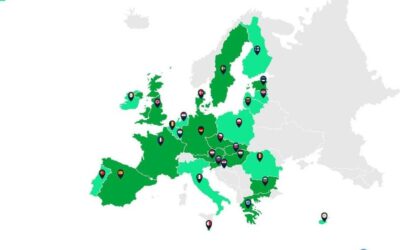
The EU has moved towards a more standardised framework through the Markets in Crypto-Assets Regulation (MiCA).
This creates clearer rules around:
- Stablecoins
- Crypto asset service providers (CASPs)
- Consumer protection
- Licensing requirements
- Reserve management
At the same time, European banks remain cautious, especially regarding businesses with cross-border crypto flows or offshore exposure.
United States
The US market remains influential but fragmented.
Different agencies continue applying overlapping oversight, including:
- SEC
- CFTC
- FinCEN
- OFAC
- State-level regulators
Banks operating in the US increasingly require extensive AML documentation before onboarding digital asset businesses.
Middle East and Asia
Jurisdictions such as the United Arab Emirates, Singapore, and Hong Kong continue positioning themselves as crypto-friendly hubs.
However, licensing and substance requirements have become much stricter in 2026.
The era of lightly regulated crypto incorporation is rapidly disappearing.

Why Banks Still View Crypto as High Risk
Even regulated crypto businesses often face banking resistance.
From a bank’s perspective, digital asset companies present several risks simultaneously:
- AML and sanctions exposure
- Transaction tracing complexity
- Cross-border fund movement
- Volatility concerns
- Regulatory uncertainty
- Reputational risk
This means banks often apply enhanced due diligence before approving accounts.
Some businesses are rejected simply because compliance teams lack the internal expertise to assess crypto operations properly.
Others face ongoing monitoring long after onboarding is complete.
Common Banking Challenges Crypto Businesses Face
Delayed or rejected account applications
Many crypto firms spend months attempting to secure stable banking relationships.
Banks frequently request:
- Full shareholder structures
- Wallet tracing reports
- Source-of-funds documentation
- AML manuals
- Licensing proof
- Customer onboarding policies
- Risk assessment frameworks
Even after approval, relationships may remain fragile.
Frozen payments and compliance reviews
International transfers connected to crypto activity often trigger additional reviews.
Banks may temporarily freeze transactions while investigating:
- Wallet origins
- Exchange counterparties
- Sanctions exposure
- Transaction patterns
As discussed in “How Can Merchants Recover from Frozen Accounts? A Real Case”, operational disruption can escalate quickly when payment infrastructure becomes unstable.
Higher banking costs
Crypto businesses increasingly face:
- Larger rolling reserves
- Higher transaction fees
- Increased compliance costs
- More expensive payment processing
- Stricter settlement conditions
In some cases, providers simply classify all crypto activity as “high risk” regardless of operational quality.

FATF Rules Are Driving Global Banking Behaviour
The Financial Action Task Force continues shaping how banks approach digital assets.
According to the FATF Virtual Assets Guidance, VASPs are now expected to implement the same AML/CFT controls as traditional financial institutions, including customer due diligence, transaction monitoring, and suspicious activity reporting.
In particular, FATF’s “Travel Rule” now affects many crypto businesses globally.
This rule requires virtual asset service providers (VASPs) to collect and transmit customer information during certain transactions, similar to traditional wire transfers.
Banks increasingly expect crypto companies to demonstrate:
- Travel Rule compliance
- Blockchain monitoring tools
- Transaction screening systems
- Sanctions controls
- Beneficial ownership transparency
Firms connected to higher-risk jurisdictions face even more pressure.
As explored in our article “FATF High-Risk Jurisdictions in 2026”, geographical exposure now directly affects onboarding outcomes and banking relationships.
Why Economic Substance Matters for Crypto Firms
One major shift in 2026 is the growing focus on operational substance.
Banks increasingly distrust crypto companies that exist only as paper structures.
This means businesses may need to demonstrate:
- Real office presence
- Local staff
- Operational management
- Technical teams
- Compliance officers
- Genuine decision-making activity
As highlighted in “2025 Economic Substance Rules: What Offshore Companies Must Prove”, regulators and banks now expect offshore entities to show meaningful operational activity rather than simple incorporation structures.
Crypto businesses are no exception.
The Rise of Specialised Banking and EMIs
Traditional banks are not the only option anymore.
In 2026, many crypto businesses operate through specialised financial providers, including:
- Crypto-friendly EMIs
- Digital banking platforms
- Licensed payment institutions
- Stablecoin settlement providers
- Regulated fintech infrastructure firms
As explained in “The Rise of NBFIs: A New Route for High-Risk Merchants?”, non-bank financial institutions increasingly serve sectors avoided by traditional banks.
However, businesses should remain cautious.
Not all fintech providers offer the same level of safeguarding or banking stability.

Settlement Risk Is Becoming a Major Issue
Many crypto firms rely heavily on virtual IBANs, payment intermediaries, or pooled settlement systems.
This creates additional exposure if:
- A provider loses banking access
- Regulators intervene
- Correspondent banks terminate relationships
- Payment rails become restricted
As explored in “When a Virtual IBAN Is Not Enough: Understanding Settlement Risk”, businesses using layered payment infrastructure may lose access to funds even when they themselves remain compliant.
For crypto companies managing large transaction volumes, settlement resilience is now becoming as important as onboarding itself.

How Crypto Businesses Can Improve Banking Success
Build institutional-grade compliance
Banks increasingly expect crypto firms to operate like regulated financial institutions.
This includes:
- Written AML policies
- Compliance officers
- Blockchain analytics tools
- KYC verification systems
- Sanctions screening
- Internal audit procedures
Maintain transparent ownership structures
Complex offshore chains or nominee arrangements often create red flags.
Simpler, transparent structures generally improve onboarding outcomes.
Separate operational activities clearly
Banks want clarity around:
- Custody
- Trading
- Payments
- Token issuance
- Treasury operations
- Customer funds
Businesses with clearly separated operational functions are usually viewed more favourably.
Diversify financial infrastructure
Relying on a single banking partner creates unnecessary vulnerability.
Many digital asset firms now maintain:
- Multiple EMIs
- Backup settlement providers
- Multi-jurisdictional accounts
- Separate treasury arrangements
This reduces operational risk during compliance disruptions.
The Banking Environment Is Maturing — Slowly
Despite ongoing caution, the broader environment is evolving.
Large financial institutions are increasingly exploring:
- Tokenised deposits
- Digital asset custody
- Stablecoin settlement
- Blockchain-based payments
- Institutional crypto services
This gradual institutionalisation is changing perceptions.
However, the businesses benefiting most are usually the ones that already operate with strong governance, transparent compliance, and professional financial structures.
The era of informal crypto operations is fading rapidly.
Yes, but the process requires thorough preparation. Banks and EMIs will open accounts for crypto businesses that can demonstrate proper AML policies, transparent ownership structures, licensing where applicable, and clean transaction history. The key is presenting your business as a compliant, professionally managed operation rather than a speculative startup.
Most banks and financial institutions will request a full shareholder structure, AML and KYC policy documentation, blockchain analytics reports, source-of-funds evidence, licensing certificates, customer onboarding procedures, and a risk assessment framework. Having these prepared in advance significantly improves onboarding success rates.
The FATF Travel Rule requires virtual asset service providers (VASPs) to collect and transmit originator and beneficiary information for crypto transactions above certain thresholds, similar to traditional wire transfers. Banks increasingly expect crypto businesses to demonstrate Travel Rule compliance before approving accounts or processing international payments.
EMIs and specialised payment institutions can be a practical alternative for crypto businesses that struggle with traditional bank onboarding. However, businesses should carefully assess the EMI’s own banking stability, safeguarding arrangements, and regulatory standing before relying on them as a primary financial partner.
MiCA creates a clearer legal framework for crypto asset service providers operating in the EU, which in theory should improve banking access for licensed entities. In practice, European banks remain cautious, but a MiCA licence does provide a stronger compliance foundation that can positively influence onboarding decisions with more progressive financial institutions.
Bottom Line
International banking rules for crypto and digital asset businesses in 2026 are becoming more demanding, but they are also becoming clearer.
Banks are no longer automatically rejecting all crypto activity. Instead, they are assessing whether businesses can demonstrate compliance maturity, operational substance, and proper financial controls.
For crypto firms, success increasingly depends on behaving less like experimental startups and more like regulated international financial businesses.
The companies that adapt to this reality will be in a much stronger position to secure stable banking access, payment infrastructure, and long-term international growth.
If your crypto or digital asset business is struggling to secure stable banking access, or if you want to assess your current compliance structure before approaching new providers, book a complimentary call with our expert team at widelia.com/contact-us — we will review your setup and identify the right banking route for your situation.
For deeper industry insight, see our article: “FATF High-Risk Jurisdictions List 2026: What It Means for Your Business Banking”
Disclaimer
Widelia and its affiliates do not provide tax, investment, legal, or accounting advice. Material on this page has been prepared for informational purposes only, and is not intended to provide, and should not be relied on for, tax, investment, legal or accounting advice. You should consult your own tax, legal and accounting advisors before engaging in any transaction. Please consult https://widelia.com/disclaimer/ for more information.
Sources
FATF Guidance for a Risk-Based Approach to Virtual Assets