
For many business owners, few emails are more alarming than a message from a bank announcing that an account will be closed.
Sometimes the notice arrives with little explanation. In other cases, the bank provides only a generic reference to compliance policies or internal risk reviews. Regardless of the wording, the result is often the same: disrupted operations, delayed payments, frustrated clients, and a scramble to find alternative banking solutions.
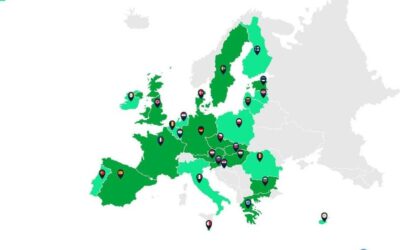
This is not an isolated phenomenon. Across Europe, banks are closing more business accounts than they did just a few years ago. The trend affects startups, international companies, e-commerce merchants, consultants, crypto firms, and even traditional trading businesses.
The question is not simply why this is happening. But, more importantly, what can businesses do to avoid becoming the next casualty?

The Era of Banking De-Risking
Over the past decade, European banks have faced growing pressure from regulators.
Anti-money laundering rules have become stricter. Sanctions enforcement has intensified. Regulators expect banks to understand every client, every transaction, and every source of funds moving through their systems.
As a result, many institutions have adopted what the industry calls “de-risking”.
Instead of managing complex or potentially risky clients, some banks simply remove them.
From the bank’s perspective, closing one questionable account is often cheaper than risking a regulatory investigation or a multi-million-euro fine.
For legitimate businesses, however, this creates a frustrating reality. A company may operate legally, pay taxes, and maintain a healthy customer base, yet still find itself under increased scrutiny because of industry exposure, international transactions, or changing compliance expectations.
The Most Common Reasons Banks Close Accounts
While every case is different, several patterns appear repeatedly.
Unclear Source of Funds
Banks want to know where money comes from and where it goes.
If incoming payments suddenly increase, originate from unexpected countries, or do not match the company’s stated activities, compliance teams may become concerned.
A consulting company receiving hundreds of small payments from multiple jurisdictions may trigger questions if its onboarding documents described a completely different business model.
The problem is not necessarily wrongdoing. Sometimes the bank simply lacks enough information to understand the activity.
High-Risk Industries
Certain sectors receive greater scrutiny than others.
These often include:
- Cryptocurrency
- Gaming
- Forex
- Adult content
- Supplements
- Affiliate marketing
- High-ticket coaching
- Payment services
Even legitimate businesses operating in these sectors may face additional reviews.
Visa and Mastercard have continued tightening fraud and dispute monitoring programmes, increasing pressure on banks and payment providers to reduce exposure to merchants with elevated chargeback ratios.
Transaction Behaviour Changes
One of the fastest ways to attract compliance attention is sudden behavioural change.
For example:
- A business begins accepting payments from new regions
- Transaction volumes increase dramatically
- Payment patterns become inconsistent
- New products or services are introduced
These changes are not inherently problematic. However, if the bank is not informed beforehand, compliance teams may interpret them as warning signs.

Geography Matters More Than Ever
One of the biggest changes in recent years has been the growing importance of geographic exposure.
Businesses connected to sanctioned jurisdictions, politically sensitive regions, or countries perceived as higher risk often face additional scrutiny.
Sometimes the issue is not where the company is registered but where its customers, suppliers, or beneficial owners are located.
Banks increasingly analyse entire transaction ecosystems rather than focusing solely on the account holder.
For international companies, this means every business relationship can influence banking risk.
Companies working across multiple jurisdictions should expect ongoing due diligence reviews and periodic requests for updated information.
The Hidden Risk: Lack of Economic Substance
A company may have perfect paperwork and clean transactions but still face problems if it lacks genuine operational substance.
Banks increasingly want to see evidence that a business is real.
This includes:
- Employees
- Contracts
- Clients
- Invoices
- Office presence
- Commercial activity
The era of paper companies is rapidly disappearing.
Economic substance rules introduced across multiple jurisdictions have reinforced this trend. Businesses that exist primarily on paper often struggle to maintain banking relationships and may face additional reviews from both banks and regulators.
In 2026, banks are less interested in where a company is incorporated and more interested in how it actually operates.
Why Some Account Closures Come Without Warning
Many business owners are surprised when a bank closes an account with limited explanation.
In reality, banks are often legally restricted in what they can disclose.
If a compliance review identifies potential concerns, staff may be prohibited from revealing specific details. In some cases, providing too much information could interfere with regulatory obligations or ongoing investigations.
This creates frustration because businesses cannot always address the issue directly.
Often, account closures result from a combination of factors rather than a single event. Small concerns accumulate over time until the bank decides the relationship no longer fits its risk appetite.
The Cost of Losing a Bank Account
The immediate impact is obvious:
Payments stop.
Suppliers cannot be paid.
Customer funds may become temporarily inaccessible.
Payroll can be delayed.
However, the longer-term consequences can be even more damaging.
A closed account may affect:
- Future banking applications
- Merchant account approvals
- Investor confidence
- Client trust
- Operational continuity
Some businesses spend months rebuilding banking relationships after an unexpected closure.
For international companies, the disruption can extend across multiple providers, particularly if payment processors or correspondent institutions also become cautious.
Recent cases involving frozen accounts have shown how quickly operational challenges can escalate when businesses rely on a single financial institution.

How to Reduce the Risk of Account Closure
No strategy guarantees complete protection, but several practices significantly reduce risk.
Maintain Complete Transparency
Banks dislike surprises.
If your business model changes, transaction volumes increase, or new markets are added, inform your bank proactively.
Regular communication helps compliance teams understand your activity before concerns arise.
Keep Documentation Updated
Many businesses only update documents during onboarding.
This is a mistake.
Keep readily available:
- Corporate documents
- Contracts
- Invoices
- Financial statements
- Source-of-funds records
- Ownership information
Fast responses to compliance requests can often prevent minor concerns from becoming major problems.
Diversify Banking Relationships
One of the most important lessons from recent years is simple: never rely entirely on one provider.
Many international businesses now maintain:
- A primary operating account
- A secondary banking relationship
- An EMI account
- A backup payment provider
This approach improves resilience and reduces operational disruption if one institution encounters difficulties.
Match Your Banking Structure to Your Business
Not every bank is suitable for every business.
A global e-commerce company has different needs from a local consultancy. Likewise, a fintech startup faces different compliance challenges than a manufacturing business.
Choosing institutions that understand your industry significantly improves relationship stability.

What Banks Want to See in 2026
Despite increasing compliance pressure, most banks are not looking to close accounts unnecessarily.
They want clients who are:
- Transparent
- Well documented
- Operationally active
- Financially stable
- Easy to understand
Businesses that provide clear explanations, maintain proper records, and communicate proactively generally experience fewer banking issues.
In today’s environment, clarity is often more valuable than size.
A small business with excellent compliance practices can be more attractive than a much larger company with incomplete documentation or inconsistent transaction patterns.
Frequently Asked Questions
Banks are often legally restricted from disclosing the full reasons behind account closures. If a compliance review identifies potential concerns, staff may be prohibited from sharing specific details to avoid interfering with regulatory obligations. In most cases, closures result from a gradual accumulation of risk factors rather than a single event — which is why proactive communication and documentation matter so much.
Yes. Banks make decisions based on risk appetite, not just legality. A fully compliant business can still be closed if its transaction patterns appear unusual, its industry is considered high risk, or its documentation does not adequately explain its operations. Being legal is necessary but no longer sufficient to guarantee banking stability.
This varies by country and institution. In most EU jurisdictions, banks are required to provide a minimum notice period before closing an account, typically ranging from 30 to 60 days. However, in cases involving suspected fraud or regulatory concerns, accounts can be frozen or closed with little or no prior notice.
Act quickly. Contact your relationship manager to understand the reason if possible, begin transferring operational funds to a backup account immediately, notify key suppliers and clients of a potential payment delay, and start the process of opening alternative banking relationships. Having a secondary account already in place before a closure occurs significantly reduces disruption.
The most effective steps are maintaining proactive communication with your bank, keeping documentation current and organised, demonstrating genuine operational substance, diversifying across multiple banking providers, and informing your bank in advance of any significant changes to your business model or transaction patterns. Businesses that treat banking as a long-term relationship rather than a transactional service generally experience far fewer account closures.
Bottom Line
European banks are closing more accounts because regulatory expectations have increased dramatically. Compliance teams now face intense pressure to understand every client relationship and every transaction moving through the financial system.
For businesses, the solution is not panic. It is preparation.
Strong documentation, genuine economic substance, proactive communication, and diversified banking relationships remain the most effective ways to reduce risk.
Banking in Europe is becoming more selective, but companies that operate transparently and manage compliance carefully can still build stable, long-term banking relationships.
For further insights, explore our article “EU vs Offshore Banking: What Actually Works Today?”
If you need support reviewing your banking structure or preparing for enhanced due diligence, book a complimentary consultation with our team.
Disclaimer
Widelia and its affiliates do not provide tax, investment, legal, or accounting advice. Material on this page has been prepared for information purposes only, and is not intended to provide, and should not be relied on for, tax, investment, legal or accounting advice. You should consult your own tax, legal and accounting advisors before engaging in any transaction. Please consult https://widelia.com/disclaimer/ for more information.