Choosing between an EMI and a bank account in 2026 has become one of the most important decisions for international businesses managing cross-border payments. Banks held deposits, offered loans, and formed the backbone of the financial system. EMIs, meanwhile, were niche providers offering payment services and digital wallets.
Today, the line has become far less clear.
Modern EMIs provide multi-currency accounts, international transfers, virtual IBANs, debit cards, and even payment processing. For many businesses, they look and feel very similar to traditional banks.
Yet beneath the surface, important differences remain.
As international businesses become increasingly reliant on fintech solutions, one question is being asked more frequently than ever: which is actually safer in 2026 – an EMI account or a traditional bank account?
The answer is more nuanced than some business owners might expect.
What Is an EMI?
An Electronic Money Institution is a regulated financial company authorised to issue electronic money and provide payment services.
Many well-known fintech providers operate under EMI licences.
Depending on the jurisdiction, EMIs may offer:
- Multi-currency accounts
- Virtual IBANs
- International transfers
- Payment collection services
- Debit cards
- Foreign exchange solutions
For businesses operating internationally, EMIs have become extremely attractive due to their speed, flexibility, and digital-first approach.
Opening an EMI account often takes days rather than weeks or months.
For startups and cross-border companies, this accessibility has been transformative.
How Banks Differ From EMIs
Traditional banks perform a broader role within the financial system.
Banks can generally:
- Accept deposits
- Provide loans and credit facilities
- Offer trade finance
- Access central bank systems
- Participate directly in payment infrastructure
Most importantly, banks typically hold customer deposits directly on their balance sheets under banking licences.
EMIs operate differently.
Instead of taking deposits, they issue electronic money and safeguard client funds through separate arrangements required by regulators.
This distinction is central to understanding safety.
Understanding Fund Protection
One of the most common misconceptions is that all financial accounts receive identical protection.
In reality, the level of protection often differs significantly.
Traditional banks in many jurisdictions participate in deposit guarantee schemes.
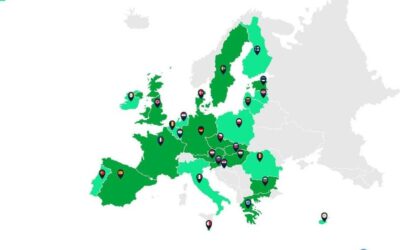
Within the European Union, deposits are often protected up to €100,000 per depositor under EU Deposit Guarantee Schemes Directive.
If a licensed bank fails, customers may be eligible for compensation under these schemes.
EMIs generally do not participate in deposit guarantee programmes.
Instead, regulators require them to safeguard customer funds.
Safeguarding usually involves:
- Segregated client accounts
- Ring-fenced funds
- Custodian arrangements
- Safeguarding banks
While safeguarding provides important protection, it is not always identical to deposit insurance.
This distinction becomes particularly important when businesses hold large balances.

Why EMIs Became So Popular
Despite differences in protection, EMIs have grown rapidly across Europe and beyond.
Several factors explain their rise.
Faster Onboarding
Traditional banks often require extensive due diligence.
EMIs typically provide:
- Remote onboarding
- Digital verification
- Faster approvals
- Streamlined compliance
This is especially valuable for international businesses and non-resident companies.
Better Cross-Border Payments
Many EMIs specialise in:
- Multi-currency accounts
- International transfers
- Foreign exchange services
- Global payment infrastructure
For businesses operating internationally, these features can significantly reduce friction and costs.
Greater Flexibility
Certain industries that struggle with traditional banking may find EMIs more accommodating.
These include:
- SaaS businesses
- E-commerce companies
- Digital agencies
- International consultants
- Online marketplaces
However, flexibility should not be confused with lower compliance standards.
Most EMIs now conduct extensive KYC and AML reviews.
The Hidden Risk: Settlement Exposure
Safety discussions often focus only on regulation.
However, operational risk has become equally important.
Many businesses discovered this during recent fintech disruptions.
An EMI may rely on:
- Partner banks
- Correspondent institutions
- Third-party payment infrastructure
If one of these relationships encounters problems, customer funds may become temporarily inaccessible.
This is known as settlement risk.
Recent years have shown that even compliant businesses can experience disruptions when upstream providers face regulatory or operational issues. Settlement risk remains one of the most overlooked aspects of modern financial infrastructure.
The issue is not necessarily insolvency. Sometimes it is simply delayed access to funds.
For businesses managing payroll or supplier payments, even short disruptions can have serious consequences.
Are Banks Completely Safe?
Traditional banks are often viewed as the safest option.
In many respects, they remain highly secure institutions.
However, banks also face risks.
These may include:
- Compliance reviews
- Account closures
- Transaction restrictions
- Cross-border limitations
- De-risking policies
In recent years, European banks have become significantly more selective.
Many businesses have experienced account closures despite operating legally and transparently.
Banks increasingly manage regulatory exposure by reducing relationships they consider complex or higher risk.
As a result, safety today extends beyond deposit protection to include account stability and operational continuity.

Why Businesses Are Choosing Hybrid Structures
Rather than choosing one solution exclusively, many businesses now use both banks and EMIs.
This hybrid approach allows companies to benefit from the strengths of each model.
A typical structure may involve:
Traditional Bank
Used for:
- Reserve funds
- Large balances
- Financing needs
- Long-term stability
EMI
Used for:
- Daily operations
- International transfers
- Multi-currency collections
- FX management
This diversification reduces reliance on any single provider.
Recent account freezes across the fintech sector demonstrated how quickly businesses can face operational disruption when relying on only one financial institution. Diversification has become an increasingly important risk-management tool.
What Regulators Are Focusing on in 2026
Regulators continue increasing oversight across both banks and EMIs.
Areas receiving particular attention include:
- Safeguarding practices
- AML controls
- Sanctions screening
- Fraud monitoring
- Customer due diligence
EMIs have matured significantly over the past decade and many now operate under robust regulatory frameworks.
The European Banking Authority’s guidelines on safeguarding require EMIs to maintain segregated client funds at all times.
However, businesses should still perform due diligence before choosing a provider.
Important questions include:
- Which regulator supervises the institution?
- How are customer funds safeguarded?
- Which banks hold safeguarded funds?
- Is there deposit protection?
- What happens if services are interrupted?
Understanding these details helps businesses make informed decisions rather than relying solely on brand recognition.

EMI vs Bank Account in 2026: Which Is Actually Safer?
The EMI vs bank account debate in 2026 comes down to what safety means for your specific business.
The answer depends on what “safe” means for your business.
If safety means deposit protection and long-term institutional stability, traditional banks often retain an advantage.
If safety means operational flexibility, international payments, and faster onboarding, EMIs may provide significant benefits.
For many companies, the safest solution is not choosing one over the other.
It is combining both.
Businesses increasingly view financial infrastructure the same way they view cybersecurity: redundancy matters.
Maintaining multiple providers reduces operational risk and improves resilience when unexpected disruptions occur.
Frequently Asked Questions
No. EMIs generally do not participate in deposit guarantee schemes. Instead, regulators require them to safeguard client funds through segregated accounts, ring-fenced arrangements, or custodian banks. While safeguarding provides important protection, it is not identical to the deposit insurance offered by traditional banks, which in the EU typically covers up to €100,000 per depositor.
If a regulated EMI fails, safeguarded funds should be protected and returned to clients separately from the institution’s own assets. However, the process can take time and may not be as straightforward as bank deposit compensation. This is why businesses holding large balances should carefully assess the safeguarding arrangements of any EMI they use before committing significant funds.
For many operational needs, yes. EMIs handle international transfers, multi-currency accounts, and daily payments effectively. However, they cannot fully replace traditional banks for services such as loans, trade finance, and long-term reserve management. Most businesses use EMIs alongside traditional banking rather than as a complete replacement.
Settlement risk refers to the possibility that funds become temporarily inaccessible due to disruptions in the payment chain — for example, if an EMI’s partner bank encounters regulatory or operational problems. Even compliant businesses can experience delayed access to funds when upstream providers face issues. This makes diversification across multiple financial providers an important risk management strategy for any international business.
The choice depends on your specific business needs. If you require deposit protection, financing, and long-term institutional stability, a traditional bank is preferable for core reserves. If you need fast onboarding, multi-currency functionality, and flexible international payments, an EMI may serve your operational needs better. Many businesses combine both to balance stability and flexibility across their financial infrastructure.
Bottom Line
The EMI vs bank account question in 2026 has no single correct answer.
EMIs and traditional banks serve different purposes in the modern financial ecosystem.
Banks continue to offer strong regulatory protection, deposit guarantees, and long-term credibility. EMIs provide flexibility, innovation, and efficient cross-border services.
Neither model is universally superior.
In 2026, the safest financial structure is often a diversified one that combines the strengths of both.
Businesses that understand how funds are protected, how settlement works, and where risks exist are far better positioned to build resilient banking structures for the future.
For further insights, explore our article “When a Virtual IBAN Is Not Enough: Understanding Settlement Risk“.
If you need support choosing the right banking structure for your business, book a complimentary consultation with our team.
Disclaimer
Widelia and its affiliates do not provide tax, investment, legal, or accounting advice. Material on this page has been prepared for informational purposes only, and is not intended to provide, and should not be relied on for, tax, investment, legal or accounting advice. You should consult your own tax, legal and accounting advisors before engaging in any transaction. Please consult https://widelia.com/disclaimer/ for more information.