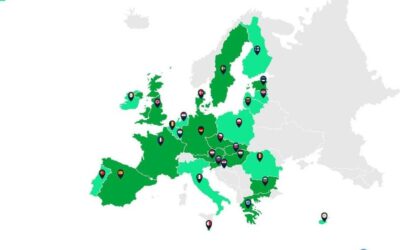

The MATCH List is one of the most serious consequences a merchant can face — and being blacklisted can make
it nearly impossible to accept card payments for years.
For businesses that rely on card payments, few things are more damaging than being placed on the MATCH List. A single listing can make it extremely difficult to open a new merchant account, forcing companies to accept higher processing fees or even preventing them from accepting card payments altogether.
Many business owners assume the MATCH List only contains fraudulent companies. In reality, legitimate payment providers can blacklist businesses due to excessive chargebacks, compliance failures, or breaches of their merchant agreement. As payment providers tighten their risk controls in 2026, understanding how the MATCH List works has become more important than ever.
What Is the MATCH List?
The MATCH List, short for Member Alert to Control High-Risk Merchants, is a database maintained by Mastercard that enables acquiring banks and payment processors to share information about merchants whose processing agreements have been terminated for specific reasons.
The MATCH List blacklists merchants by making their termination history visible to all acquiring banks globally.
Before approving a new merchant account, acquiring banks routinely check the database during their underwriting process. If when acquiring banks find a business on the list, many providers will reject the application immediately, while others may require significantly more due diligence before making a decision.
Originally known as the Terminated Merchant File (TMF), the database was created to reduce fraud and protect the global payments ecosystem from merchants that present elevated financial or operational risk.
Being listed does not automatically mean a business has acted illegally. It simply indicates that a previous acquiring bank terminated the merchant relationship for one of Mastercard’s recognised reason codes.

Why Businesses Get Blacklisted on the MATCH List
Most MATCH listings are not caused by a single incident. Instead, they result from ongoing operational or compliance issues that eventually convince an acquiring bank that the relationship has become too risky.
Some of the most common reasons include:
- Excessive chargebacks
- Fraudulent transactions
- Money laundering concerns
- Identity fraud during onboarding
- Processing prohibited products or services
- Breaching the merchant agreement
- PCI DSS security violations
- Collusion with criminal activity
- Bankruptcy resulting in financial losses for the processor
- Unpaid fees or outstanding liabilities
Many of these problems develop gradually rather than appearing overnight. A business experiencing rising disputes, poor customer service, or increasing fraud often receives warnings before account termination becomes necessary. Similar warning signs frequently appear before merchants enter card scheme monitoring programmes.
The Most Common Cause: Excessive Chargebacks
Chargebacks remain the leading reason merchants lose their payment processing facilities.
A chargeback occurs when a customer disputes a transaction with their card issuer instead of requesting a refund directly from the merchant. While occasional disputes are normal, consistently high chargeback ratios indicate potential problems with customer satisfaction, fraud prevention, billing practices or product quality.
Help merchants
The PCI Security Standards Council provides detailed guidance on fraud prevention and security requirements that help merchants reduce dispute ratios.
Card schemes have become increasingly strict in recent years. Visa’s updated monitoring framework now expects merchants to maintain significantly lower dispute ratios than in previous years, increasing the pressure on businesses to actively manage disputes before they escalate.
Businesses that fail to address these issues may ultimately have their merchant accounts terminated, leading to a MATCH listing.

Does MATCH Mean Your Business Committed Fraud?
Not necessarily.
This is one of the biggest misconceptions surrounding the database.
Processors list many merchants because of operational weaknesses rather than deliberate misconduct. For example, a subscription business with unclear cancellation procedures may accumulate enough chargebacks to lose its merchant account, despite operating entirely legally.
Customer support
Likewise, rapid business growth can overwhelm customer support teams, causing disputes to rise sharply even when products and services are genuine.
Processors assess overall risk rather than criminal intent. Their priority is protecting the payment ecosystem, not determining whether a merchant acted dishonestly.
How the MATCH Process Works
The process generally follows several stages.
Initially, payment providers identify unusual activity such as rising disputes, increasing fraud rates or repeated compliance concerns.
The processor submits the merchant’s details for additional documentation, reserve increases or formal compliance reviews.
If the underlying issues remain unresolved, the acquiring bank may terminate the merchant account.
Following termination, the processor submits the processor submits the processor submits the merchant’s details to the MATCH database using one of Mastercard’s designated reason codes. From that point onwards, future acquiring banks can see the listing during underwriting.
How Long Does a MATCH Listing Last?
In most cases, Mastercard keeps a MATCH listing active for five years.
Merchants blacklisted on the MATCH List typically remain listed for five years regardless of improvements made.
During this period, businesses often experience:
- Repeated merchant account rejections
- Longer underwriting procedures
- Higher processing fees
- Larger rolling reserves
- Increased documentation requests
- Fewer payment provider options
Importantly, fixing the original issue does not automatically remove the listing.
Even merchants that have significantly improved their operations may still remain on the database until the record expires.

Can You Check Whether Your Business Is Listed?
Yes.
If your merchant account has recently been terminated, your first step should be contacting your previous acquiring bank or payment processor.
Ask:
- Was my business added to the MATCH database?
- Which MATCH reason code was used?
- Is there any possibility of correcting or disputing the listing?
Many merchants only discover they have been listed after several unsuccessful merchant account applications.
Understanding the exact reason behind the listing is essential before approaching another payment provider.
Can Businesses Still Obtain a Merchant Account?
Yes, although the process becomes considerably more challenging.
Certain payment providers specialise in higher-risk merchants and may still consider MATCH-listed businesses after carrying out enhanced due diligence.
Approval typically depends on several factors, including:
- The original MATCH reason code
- Time since the listing
- Current financial stability
- Industry sector
- Updated compliance procedures
- Evidence that previous problems have been resolved
While approval remains possible, merchants should generally expect stricter underwriting requirements and higher processing costs.

How to Avoid Being Added to MATCH
Preventing a MATCH listing is far easier than recovering from one.
Businesses should continuously monitor operational risk rather than waiting until problems become serious.
Monitor Chargebacks Closely
Track dispute ratios weekly rather than monthly.
Early intervention allows businesses to identify recurring customer issues before payment providers become concerned.
Strengthen Fraud Prevention
Modern fraud prevention tools such as 3D Secure, behavioural analytics, AVS verification and transaction monitoring significantly reduce payment risk.
These systems not only lower fraud but also demonstrate proactive risk management to acquiring banks.
Invest in Customer Support
Many disputes occur simply because customers cannot easily contact the business.
Fast responses, clear refund procedures and transparent communication often prevent chargebacks from occurring in the first place.
Keep Billing Transparent
Customers should immediately recognise transactions appearing on their card statements.
Clear billing descriptors, transparent pricing and visible refund policies all reduce unnecessary disputes.
Stay Compliant
Banks increasingly monitor merchants throughout the relationship rather than only during onboarding.
Businesses should promptly respond to documentation requests, maintain accurate corporate records and notify processors about any significant operational changes.
These preventative measures greatly reduce the likelihood of account termination. Similar recommendations are also essential when applying for new merchant accounts.
Recovery Is Possible
Although being placed on the MATCH List creates significant challenges, it does not necessarily prevent a business from continuing to operate.
Many merchants successfully recover by rebuilding trust with payment providers.
This typically involves improving fraud controls, reducing chargebacks, strengthening compliance procedures and demonstrating consistent operational stability over time.
Steps Towards Recovery
Specialist payment consultants can also help identify acquiring partners that understand higher-risk industries and are willing to assess applications based on current business practices rather than historical issues alone.
The process requires patience, transparency and realistic expectations, but many businesses successfully rebuild their payment infrastructure after addressing the problems that originally caused their listing.
Bottom Line
The MATCH List exists to protect the payments industry — but merchants blacklisted unfairly or due to operational issues can still recover.
For merchants, the best defence is strong payment risk management. Monitoring chargebacks, investing in fraud prevention, maintaining excellent customer service and responding quickly to compliance requests all help reduce the likelihood of account termination.
If your business has already been listed, understanding the reason behind the decision is the first step towards recovery. With stronger internal controls, improved compliance and the right payment partner, many businesses successfully restore stable payment processing and continue growing internationally.
If you need guidance on merchant account approvals or payment risk management, book a complimentary consultation with the Widelia team to discuss the most suitable solutions for your business.
FAQ
The MATCH List, short for Member Alert to Control High-Risk Merchants, is a database maintained by Mastercard that allows acquiring banks and payment processors to share information about merchants whose processing agreements have been terminated. Before approving a new merchant account application, most acquiring banks check the MATCH database as part of their standard underwriting process.
Businesses are listed because of operational weaknesses for five years from the date it was added. During this period, the listing is visible to any acquiring bank that checks the database during underwriting. Resolving the original issue that caused fixing the issue does not automatically remove the listing — the record remains until it expires, which is why prevention is significantly more effective than recovery.
Yes. Many businesses on the MATCH List are not fraudulent. Legitimate companies can be listed due to excessive chargebacks, poor compliance procedures, unclear billing practices, or breaches of their merchant agreement. The database reflects operational risk rather than criminal intent, meaning businesses that fail to manage disputes or respond to compliance requirements can still find themselves listed.
In many cases, yes — but the process is considerably more difficult. Certain payment providers specialise in higher-risk merchants and may still consider MATCH-listed businesses after enhanced due diligence. Approval typically depends on the original reason code, how much time has passed since listing, and whether the business can demonstrate that the underlying issues have been resolved with stronger compliance procedures.
The most direct approach is to contact your previous acquiring bank or payment processor and ask whether your business was added to the MATCH database following account termination, and which reason code was used. Many merchants only discover they have been listed after experiencing repeated rejections when applying for new merchant accounts. Understanding the specific reason code is essential before approaching alternative providers.
Disclaimer
Widelia and its affiliates do not provide tax, investment, legal or accounting advice. Material on this page has been prepared for information purposes only and should not be relied upon as tax, investment, legal or accounting advice. You should consult your own professional advisers before making business or financial decisions. Please refer to Widelia’s disclaimer for further information.
Sources
- Mastercard – MATCH (Member Alert to Control High-Risk Merchants)
- Visa – Visa Acquirer Monitoring Program (VAMP)
- PCI Security Standards Council – PCI DSS
- UK Finance – Payment Card Security Guidance
- Financial Conduct Authority (FCA) – Payment Services Regulations
- European Banking Authority (EBA) – Guidelines on Payment Services
- Widelia Insights: Applying for a Merchant Account? Avoid These 10 Errors
- Widelia Insights: VAMP 2025 Explained: What Happens If You Cross the Threshold