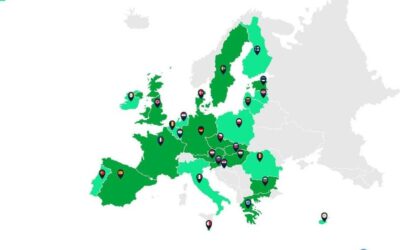

Contrary to popular belief, offshore companies remain completely legal when established and operated in compliance with local and international regulations.
The issue is not whether a company is incorporated offshore, but how it is used.
In 2026, offshore companies have not disappeared—they have evolved. Businesses that rely on genuine commercial activity, transparent ownership and compliant corporate structures can still benefit from international company formation. However, the era of shell companies existing solely for tax advantages is rapidly coming to an end.
For years, the term offshore company was associated with secrecy, tax havens and anonymous ownership. That image has changed dramatically. Today, European regulators, banks and tax authorities expect far greater transparency, while legitimate international businesses continue to use offshore structures for entirely lawful commercial purposes.
If you are considering an offshore company in or around Europe, understanding what still works—and what no longer does—is essential before making any decisions.
Thousands of international businesses legally operate through offshore or low-tax jurisdictions to:
- Facilitate international trade
- Protect assets
- Hold intellectual property
- Manage international investments
- Simplify cross-border operations
- Access global banking services
Problems arise only when offshore structures are used to conceal ownership, evade taxes or disguise the true nature of business activities.
Modern compliance standards focus on transparency rather than location.
Why Businesses Still Use Offshore Companies
Despite increasing regulation, offshore structures continue to offer legitimate commercial advantages.
Many international businesses operate across multiple countries, making a single domestic company less practical.
An offshore company may provide:
- Easier international ownership
- Greater flexibility for global operations
- Access to international banking
- Multi-currency financial management
- Simplified cross-border investment structures
- Stronger asset protection within legal frameworks
For globally active entrepreneurs, these benefits remain highly relevant in 2026.
The Biggest Change Since 2020
The offshore landscape has changed more in the past five years than during the previous two decades.
Today, banks routinely verify:
- Ultimate beneficial owners (UBOs)
- Source of wealth
- Source of funds
- Corporate structure
- Business activities
- Economic Substance
- Tax residency
- International reporting obligations
International initiatives such as the Common Reporting Standard (CRS), anti-money laundering regulations and beneficial ownership registers have significantly increased transparency across Europe and many offshore jurisdictions.
As a result, businesses should expect more documentation, more due diligence and more ongoing compliance than ever before.
Which Offshore Jurisdictions Still Work?
No single jurisdiction is suitable for every business.
Instead, successful structures are built around commercial needs rather than tax considerations alone.
Several jurisdictions continue attracting international businesses because they combine stable legal systems with well-developed corporate legislation.
United Arab Emirates
Although geographically outside Europe, the UAE remains one of the most popular jurisdictions for European entrepreneurs.
Businesses benefit from:
- Modern corporate legislation
- Strong banking infrastructure
- International reputation
- Multiple Free Zone options
- Attractive corporate tax environment
- Excellent global connectivity
Companies with genuine commercial operations continue to find the UAE an attractive international base.

Cyprus
Cyprus remains one of Europe’s leading international business centres.
Advantages include:
- EU membership
- Competitive corporate taxation
- Extensive double tax treaty network
- Strong legal framework
- Access to European markets
Cyprus is particularly attractive for holding companies, investment structures and international service businesses.
Malta
Malta continues to offer sophisticated corporate legislation for international companies.
Its advantages include:
- EU regulation
- Strong financial services sector
- Stable legal environment
- International banking relationships
- Experienced corporate service providers
Businesses with appropriate substance continue to operate successfully from Malta.
Ireland
Although not traditionally considered offshore, Ireland remains an attractive location for international companies requiring access to European markets.
Technology businesses, intellectual property companies and multinational groups continue to establish Irish operations due to its highly developed corporate ecosystem.
Luxembourg
Luxembourg remains one of Europe’s leading jurisdictions for:
- Investment funds
- Family offices
- Holding companies
- International financing structures
Its reputation for regulatory stability continues attracting institutional investors worldwide.
What No Longer Works
The biggest misconception is that offshore companies can still operate without meaningful business activity.
That approach has become increasingly difficult.
Practices that now present significant risk include:
Paper Companies
Businesses with no genuine operations, no employees and no commercial purpose face increasing scrutiny from regulators and financial institutions.
Hidden Ownership
Beneficial ownership transparency has become standard across most reputable jurisdictions.
Attempting to conceal ownership often creates banking difficulties rather than commercial advantages.
Artificial Tax Structures
Authorities increasingly examine whether profits genuinely arise where companies claim they do.
Structures lacking commercial justification may trigger tax enquiries or compliance reviews.
Nominee Arrangements Without Substance
Professional nominee services remain lawful in some jurisdictions.
However, directors are increasingly expected to exercise genuine oversight rather than simply lending their names to company documentation.

Economic Substance Has Changed Everything
As outlined in the European Banking Authority’s AML guidelines, banks are now required to assess Economic Substance as part of their customer due diligence procedures.
Businesses increasingly need to demonstrate:
- Real management
- Commercial decision-making
- Local operational activity
- Appropriate expenditure
- Qualified personnel
- Suitable premises
Banks frequently request evidence supporting these requirements during onboarding and periodic reviews.
Companies unable to demonstrate genuine substance often experience delays, enhanced due diligence or outright application rejection.
Banking Has Become More Important Than Tax
One noticeable trend in 2026 is that entrepreneurs are increasingly choosing jurisdictions based on banking access rather than headline tax rates.
A company paying slightly more tax but maintaining reliable international banking often proves far more valuable than a structure struggling to open or retain business accounts.
Banks now evaluate:
- Corporate governance
- Business model
- Transaction profile
- Geographic exposure
- Customer base
- Compliance controls
The strongest corporate structures are those that satisfy both regulatory requirements and banking expectations.
Building a Sustainable Offshore Structure
Rather than focusing solely on tax efficiency, businesses should design structures that support long-term growth.
Successful international companies typically prioritise:
Commercial Purpose
Every entity within the structure should perform a genuine business function.
Transparent Ownership
Clear ownership documentation builds confidence with banks, investors and regulators.
Professional Governance
Active directors, regular board meetings and documented decision-making demonstrate good corporate management.
Banking Readiness
Preparing documentation before approaching financial institutions significantly improves onboarding outcomes.
Ongoing Compliance
Corporate compliance should be viewed as a continuous process rather than a one-time incorporation exercise.
Businesses that invest in proper governance generally encounter fewer regulatory difficulties over time.

Common Misconceptions
Several myths continue surrounding offshore companies.
“Offshore companies don’t pay tax.”
Not necessarily. Many offshore businesses remain subject to tax obligations depending on their activities, management location and shareholder residency.
“Banks don’t like offshore companies.”
Banks do not reject offshore companies simply because of where they are incorporated.
Instead, they assess risk based on transparency, business activity and compliance standards.
“Offshore structures are only for large corporations.”
Many small and medium-sized international businesses legitimately benefit from offshore companies when their operations span multiple countries.
Looking Ahead
International regulation is expected to continue strengthening over the coming years.
However, the direction is increasingly clear.
Authorities are focusing less on where companies are incorporated and more on whether those businesses operate transparently and carry out genuine commercial activities.
Businesses built on legitimate operations, proper governance and sound compliance practices are likely to continue benefiting from international corporate structures for many years to come.
Frequently Asked Questions
Yes. Offshore companies remain completely legal when established and operated in compliance with local and international regulations. The legality depends not on where a company is incorporated but on how it is used. Businesses that operate transparently, declare their tax obligations correctly and maintain genuine commercial activity can still benefit from international company structures in 2026.
Several jurisdictions continue attracting international businesses because they combine stable legal systems with well-developed corporate legislation. The UAE, Cyprus, Malta, Ireland and Luxembourg remain among the most widely used jurisdictions for legitimate international structures. The right choice depends on your business model, industry, banking requirements and operational footprint rather than tax rates alone.
Not necessarily, but this depends heavily on the company’s activities, where management and control are exercised, and the residency of shareholders. Many offshore businesses remain subject to tax obligations in one or more jurisdictions. The widespread assumption that offshore automatically means tax-free is a misconception that can lead to significant compliance problems if not properly addressed with professional advice.
Yes, but the process has become considerably more demanding. Banks assess offshore companies based on transparency, business activity, Economic Substance and compliance standards rather than simply rejecting them based on jurisdiction. Companies that can demonstrate genuine commercial operations, transparent ownership and proper governance generally achieve better banking outcomes than those relying on paper structures alone.
The biggest risk is failing to meet Economic Substance requirements or beneficial ownership transparency obligations. Companies with no genuine operations, passive nominee directors or hidden ownership structures increasingly face banking difficulties, regulatory penalties and reputational damage. Modern offshore planning must prioritise compliance and genuine commercial activity rather than secrecy or artificial tax arrangements.
Bottom Line
Offshore companies remain a valuable tool for international business in 2026, but success depends on transparency rather than secrecy. Businesses that demonstrate genuine commercial activity, maintain Economic Substance and operate within modern compliance frameworks continue to enjoy the advantages of international company structures.
Rather than searching for the lowest-tax jurisdiction, entrepreneurs should focus on selecting a location that supports their business objectives, banking requirements and long-term growth strategy.
With careful planning and professional guidance, offshore companies can still provide flexibility, efficiency and international opportunities while remaining fully compliant with today’s regulatory expectations.
If you’re considering an offshore company or reviewing an existing international structure, book a complimentary consultation with the Widelia team to discuss the most suitable jurisdiction and compliance strategy for your business.
Disclaimer
Widelia and its affiliates do not provide tax, investment, legal or accounting advice. Material on this page has been prepared for information purposes only and should not be relied upon as tax, investment, legal or accounting advice. You should consult your own professional advisers before making business or financial decisions. Please refer to Widelia’s disclaimer for further information.
Sources
- OECD – Base Erosion and Profit Shifting (BEPS) Project
- OECD – Common Reporting Standard (CRS)
- European Commission – Anti-Tax Avoidance Directive (ATAD)
- Financial Action Task Force (FATF) – International Standards on AML/CFT
- HM Revenue & Customs (HMRC) – International Tax Guidance
- European Banking Authority (EBA) – Anti-Money Laundering Guidelines
- Widelia Insights: Economic Substance in 2026: What Offshore Companies Must Prove
- Widelia Insights: Why Offshore Banking Is Making a Comeback in 2025